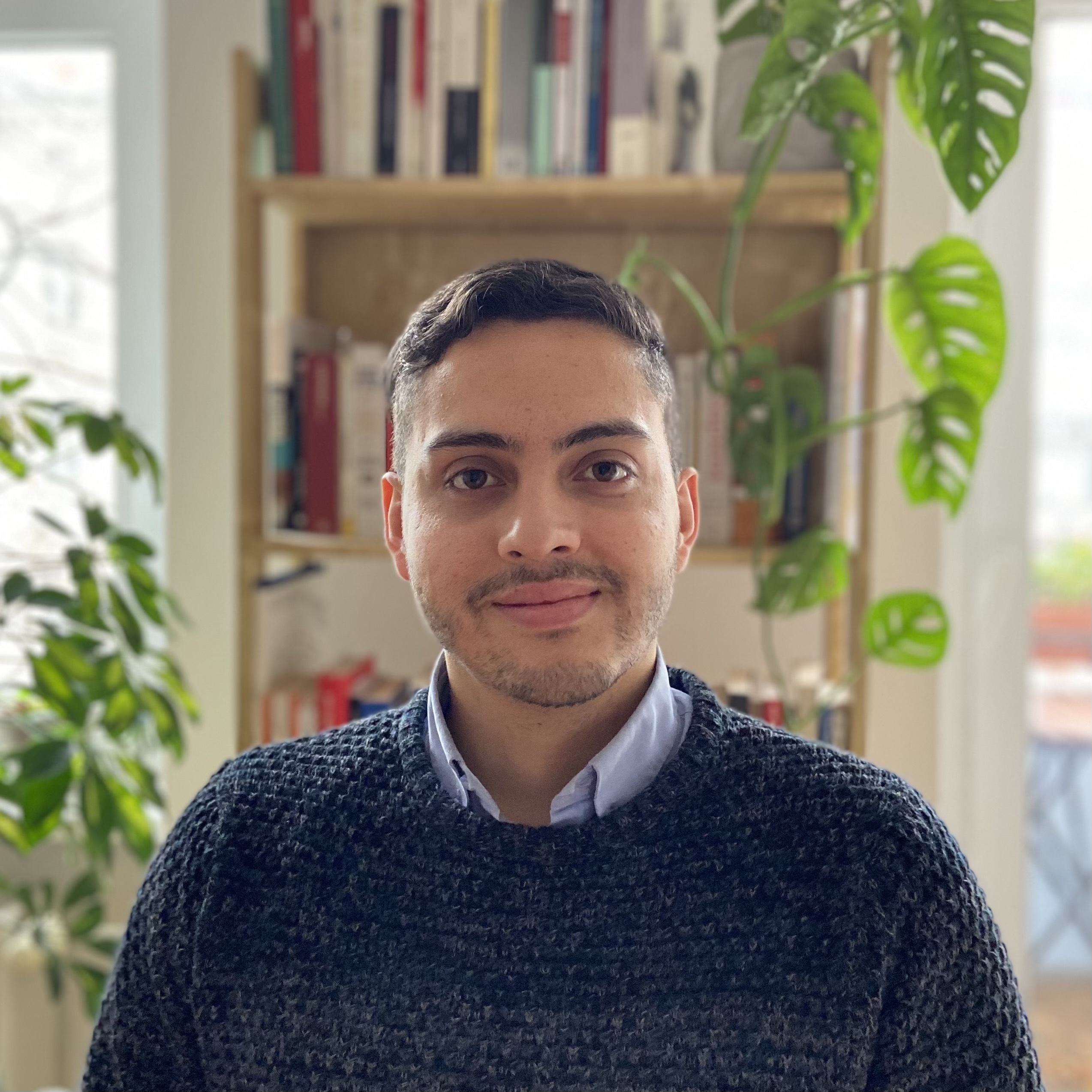
Welcome to my website! My name is Sebastian Ramirez-Ruiz. I am a Part-time Assistant Professor in Quantitative Methods and Max Weber Fellow at the European University Institute (EUI). I completed my Ph.D. at the Hertie School's Data Science Lab in Berlin. I am particularly interested in opinion and preference formation, the use of research evidence in policy- and decision-making, causal inference, #rstats, and most importantly, bicycles.
About me
I am a political scientist and computational social scientist who studies how political elites find, use, and are shaped by evidence, and how digital infrastructures are changing each of these steps. My work sits between comparative politics, political behavior, and methodology.
Before information can persuade anyone in policy and political decisionmaking, it has to reach them. I am interested in that step, what I think of as the evidence interface, which is easy to overlook because it happens before any decision is visible. Legislative research services, policy aides, social networks, institutional fora, and now large language models quietly shape what counts as relevant knowledge. In my research, I find that this curation is uneven, shaped by institutional arrangements, individual capacities, and political orientations. That, in turn, shapes who gets heard and which ideas travel.
This leads me to questions such as where governments around the world source academic and policy evidence, whether legislators and scientists actually interact, which experts get a voice in parliament, and, more recently, how all of this changes when the evidence interface becomes algorithmically curated by AI. Alongside this core research stream, I work on broader questions in political behavior and methodology, such as how voters react to unexpected events, what voting advice applications do to voters, and how survey respondents behave when they think no one is watching. My research has been published in Nature Human Behaviour, Political Science Research and Methods, Political Communication, Humanities and Social Sciences Communications, and Research & Politics. The common thread is my curiosity about how people encounter and process information “in the wild.”
My general approach is computational and comparative. I work with large, messy, mostly unstructured sources, from administrative records to information hosted online, and turn them into original databases using automated pipelines. I build these with reuse in mind, so other researchers can ask their own questions with them. I also bring a strong grounding in causal inference and research design, which shapes how I think about what any data source can and cannot tell us.
The same mix shapes my teaching: causal inference, quantitative methods, data science, and automated data collection, as well as evidence use and data management for practitioners. I enjoy teaching people who will use these tools in very different ways, from doctoral students to senior policymakers, and I believe it keeps my own research grounded.
I hold a PhD from the Hertie School's Data Science Lab and am currently a Part-time Assistant Professor in Quantitative Methods and Max Weber Postdoctoral Fellow at the European University Institute.